Queer Latin Dance San Diego
Est. Aug 2022 · Salsa · Bachata · Community
Register for Classes!
See Upcoming Events
Looking for a dance class where you can feel comfortable being yourself? Queer Latin Dance SD offers queer-centered, LGBTQ+-friendly and women-friendly salsa and bachata dance classes in San Diego. Our classes welcome beginners and experienced dancers, with no partner required. Come learn, dance, and connect in a supportive community without pressure or judgment.
Explore Dance Classes⭐️⭐️⭐️⭐️⭐️
Enjoy discounted student pricing on classes and socials
⭐️⭐️⭐️⭐️⭐️
Priority access to Queer Salsa Sunsets and early notifications for events
⭐️⭐️⭐️⭐️⭐️
Enjoy access to class recap videos for new and old classes
⭐️⭐️⭐️⭐️⭐️
Access to night socials and brunch events for members only

Are you a queer artist, musician, dancer, or performer? We'd love to hear from you!
Submit Your Performance
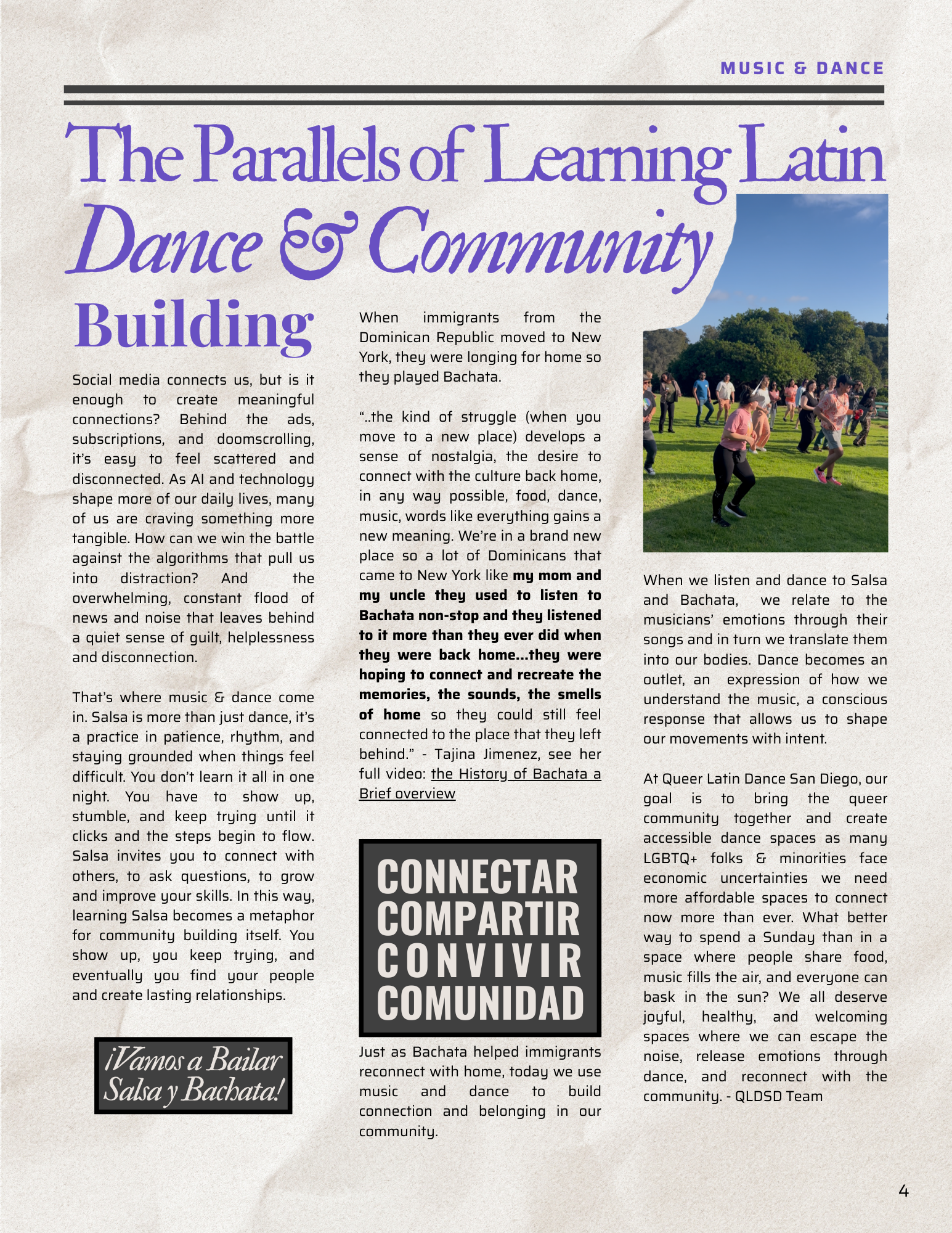
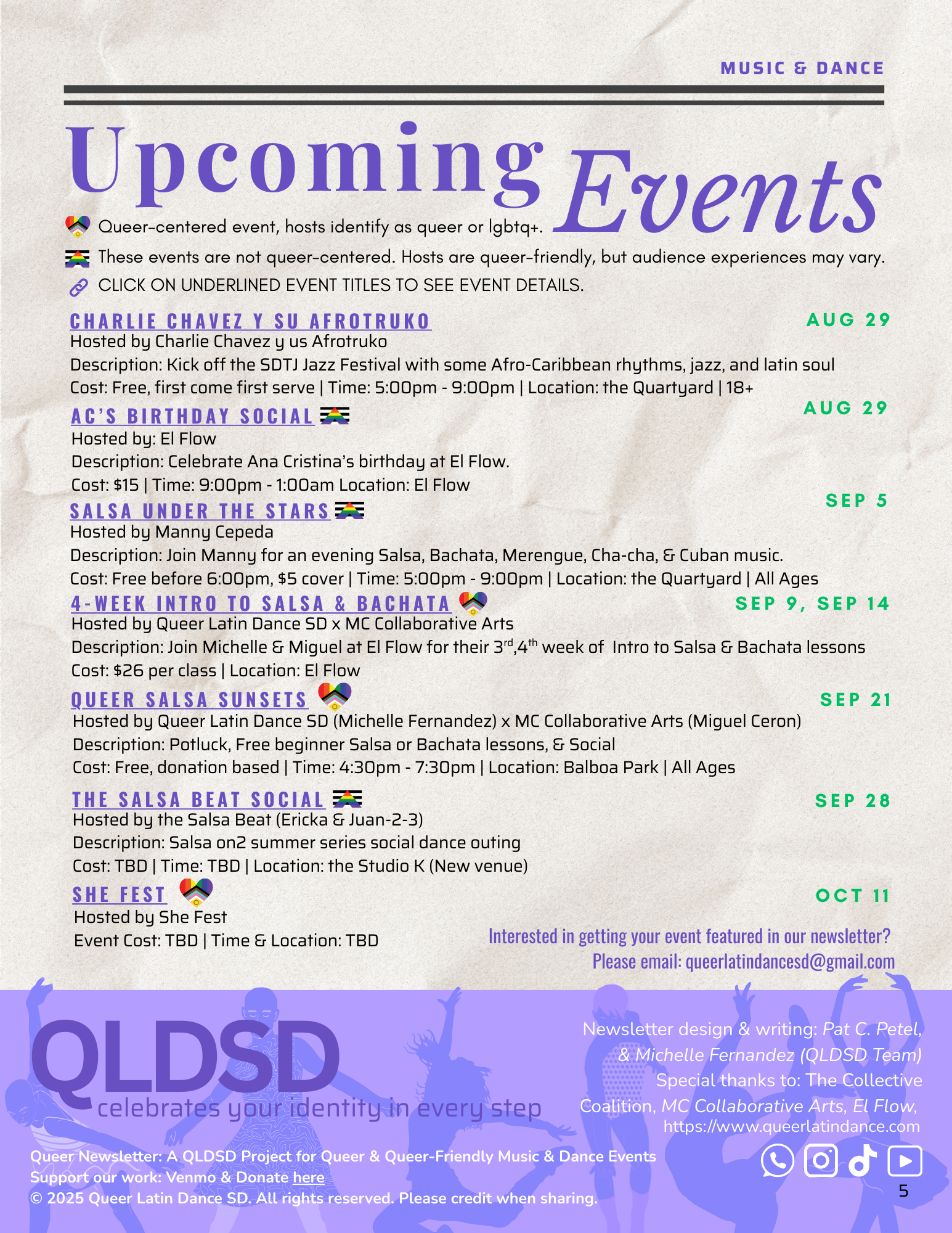
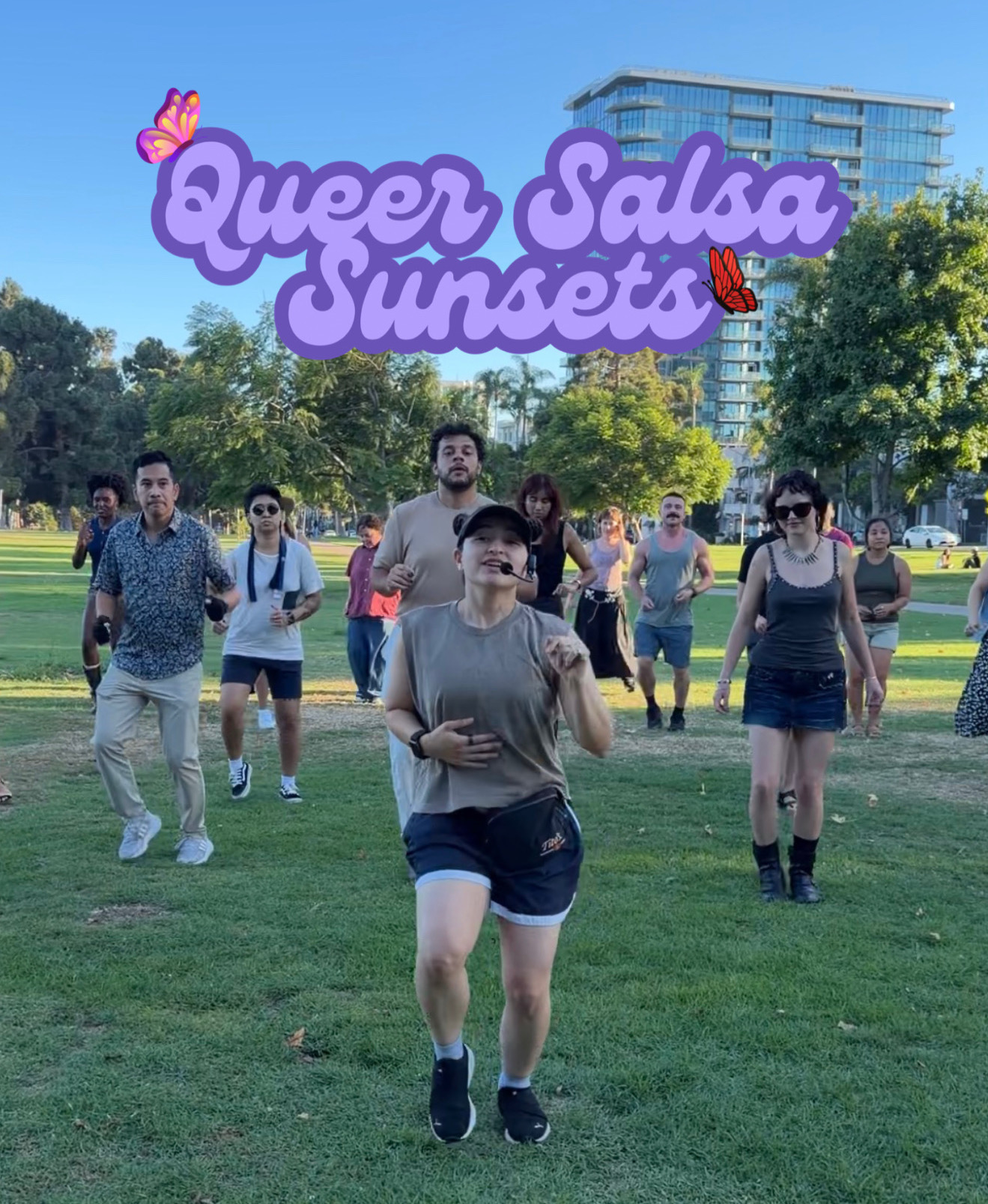
Queer Salsa Sunsets (QSS) established in May 2025 is a monthly potluck and social dance event hosted by Queer Latin Dance San Diego (QLDSD). The event takes place at a local park in San Diego, CA. Where all ages are welcome to hangout and catch the sunset while enjoying Latin music. A beginner-friendly Latin dance workshop is offered at the event led by Michelle Fernandez (founder of QLDSD). The goal of the event is for folks to experience the community and to explore Latin dance outdoors in hopes to inspire folks to continue their journey with QLDSD by taking classes and attending dance socials. QLDSD is committed to creating third spaces for the queer community, to foster a sense of stability and belonging.
Learn More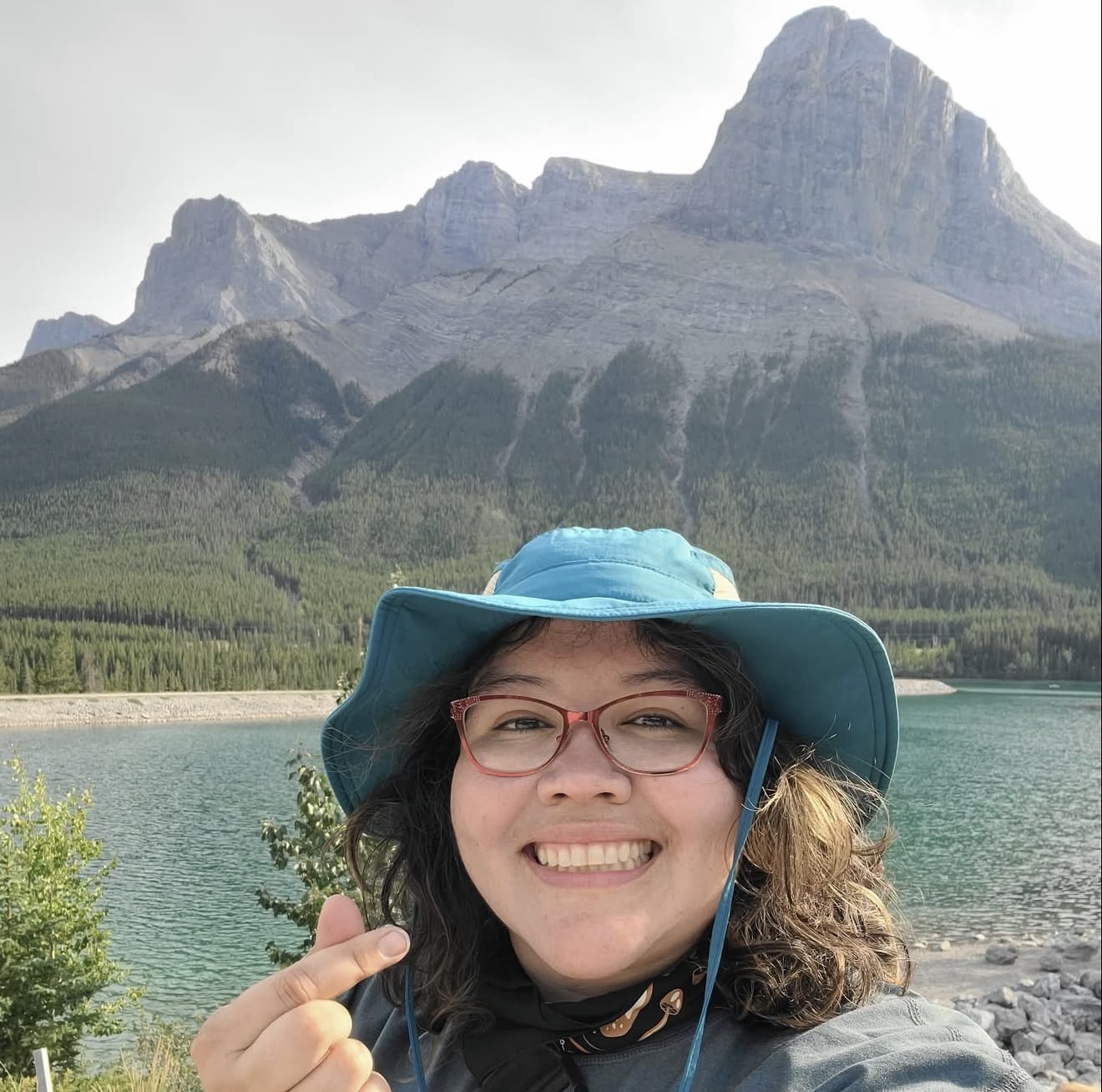
QLDSD student and community member, Ana Laura has been there from the beginning, helping promote QLDSD's mission of growing the queer Latin Dance community in San Diego.
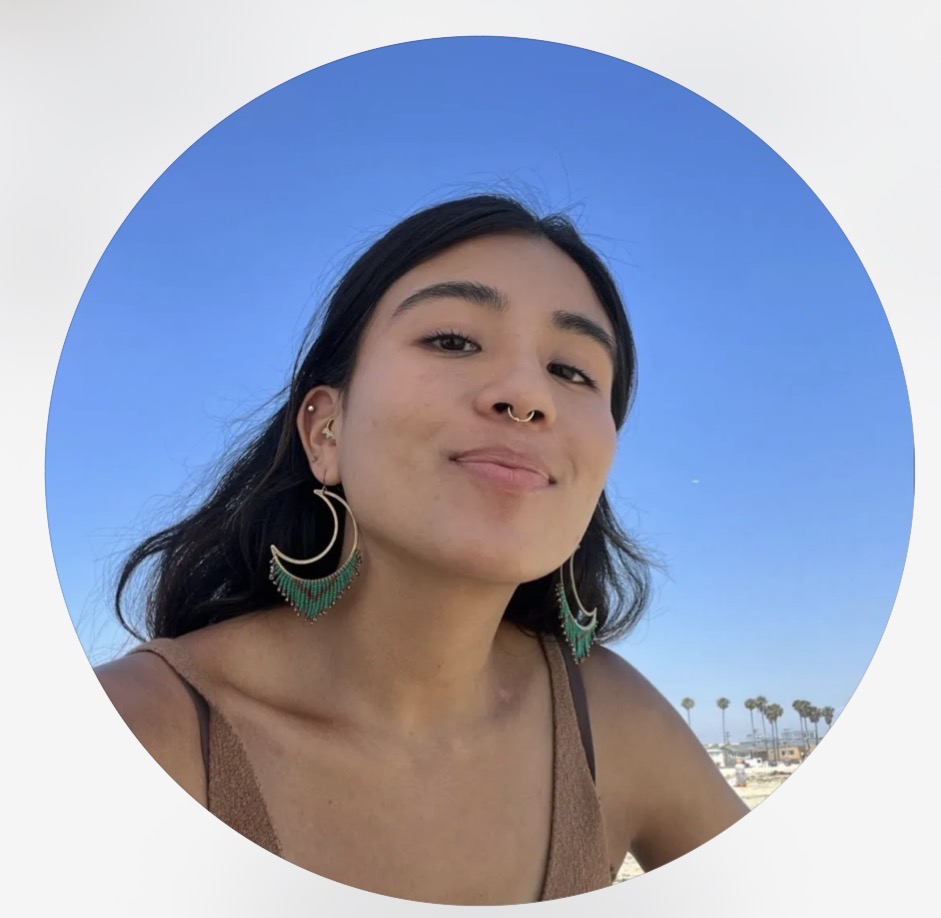
QLDSD student and community member, Cinthya has been there as QLDSD's dedicated student. Helping create a welcoming environment for all students and community members.
Queer Salsa Social (QSS) established in Nov 2025 is a dance social event hosted by Queer Latin Dance San Diego (QLDSD). The themed event takes place in a dance studio in San Diego, CA. Attendees enjoy an open-level workshop led by Michelle Fernandez or a guest instructor, followed by social dancing to Dj Pat's or a Guest Dj set of Salsa, Bachata, Cumbia and more! Food and refreshements are included. Occassionally, QSS will host a live performance or local dance group performances to showcase local talent in Southern California. The goal of the event is to provide a safe space for community members to switch dance without expectations and to focus on learning and enjoying dances without pressure or judgement.
Learn More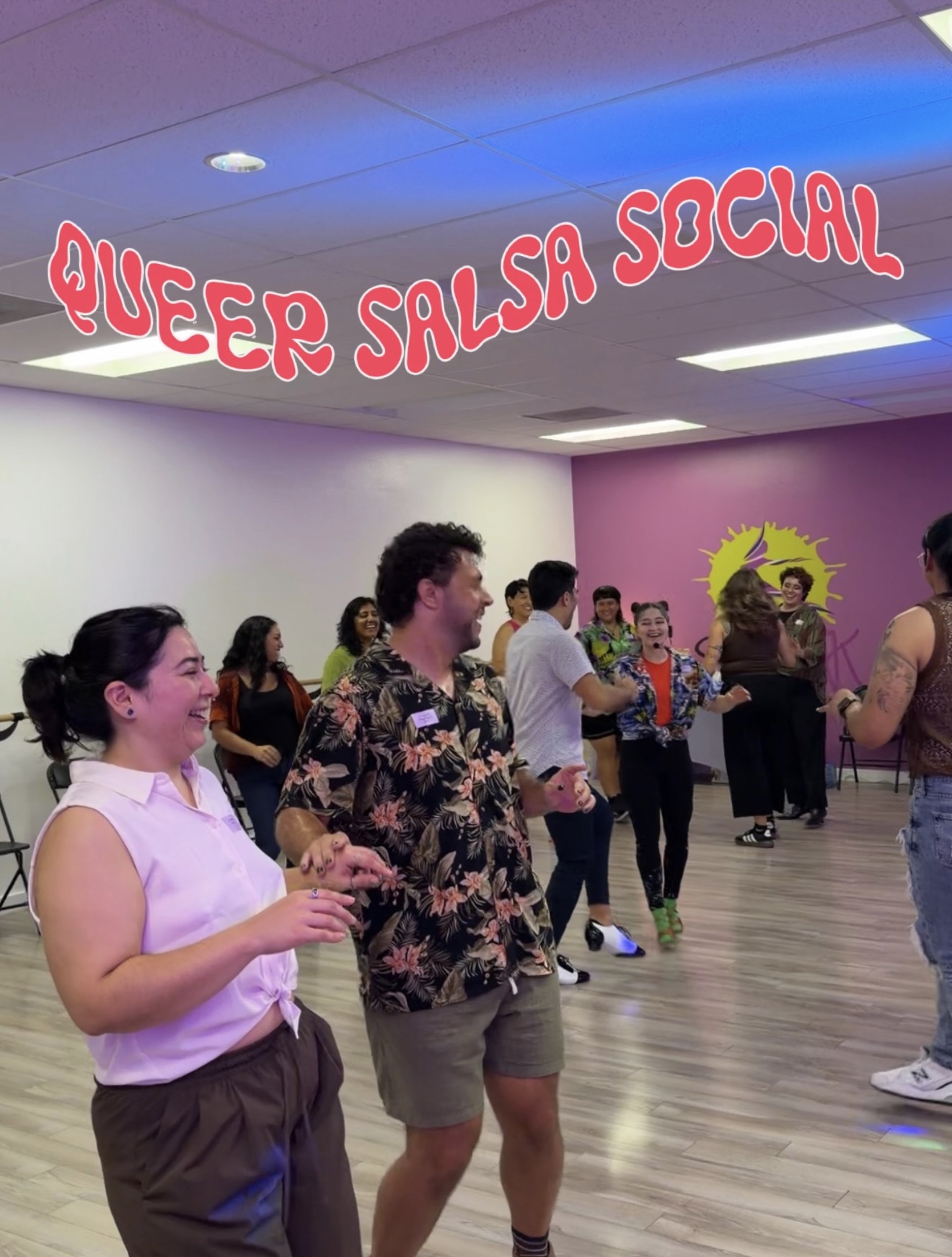
Salsa is both a music genre and a partner dance that developed in the mid-20th century. Its roots trace back to Cuba, where the son cubano blended Spanish guitar with African rhythms in the late 1800s.
By the 1940s and 1950s, Cuban musicians brought these rhythms to New York City, where they mixed with jazz, mambo, and Puerto Rican musical traditions. The term “salsa” became popular in the 1970s, thanks to Fania Records, which marketed this vibrant mix as a new style. Today, salsa is danced and celebrated worldwide, known for its energetic footwork, partner connection, and rhythmic diversity.
Bachata originated in the Dominican Republic in the early 1960s, emerging as a fusion of bolero, son, and Afro-Caribbean rhythms. Initially marginalized as “lower-class” music, bachata was closely tied to themes of heartbreak, longing, and romance.
In 1962, José Manuel Calderón recorded one of the first recognized bachata songs, “Borracho de Amor,” which helped establish the genre. Through the 1980s and 1990s, artists like Juan Luis Guerra and Aventura brought bachata to international audiences. The dance itself features a simple side-to-side basic step with a tap on the 4th beat, but over time it has expanded into multiple styles: traditional Dominican bachata, modern bachata (with more body movement and fusion elements), and sensual bachata (developed in Spain in the 2000s). Today, bachata is one of the most popular social dances worldwide.
The distinction comes from which beat of the 8-count musical phrase the dancer begins their basic step. Salsa On1 (popularized in Los Angeles in the 1990s) breaks forward on the first beat, making the style feel fast, sharp, and showy. Often matching the horn section of salsa music.
Salsa On2 (developed in New York and associated with Eddie Torres in the 1980s) breaks forward on the second beat, aligning more closely with the clave rhythm, which has African and Afro-Cuban origins dating back centuries. On2 is often described as smoother, more rhythmically grounded, and deeply connected to traditional salsa music’s roots. Both styles share the same fundamentals. The timing simply shifts the feel of the dance.
Learning times vary, but history shows both dances were created in social settings meant to be enjoyed by everyday people, not just professionals. Most students pick up the basics within 4–6 weeks of consistent classes.
Salsa, which evolved through decades of cultural exchange has more complex rhythms and may take longer to master musically.
Bachata, which began in the Dominican Republic in the 1960s, has a simpler basic step and is often easier for beginners to feel comfortable dancing within a few weeks. With steady practice, dancers can usually join social dance floors confidently in 3–6 months.
At this time, we are unable to offer refunds. Social dance events and classes require advance planning and costs, which means all purchases are final. If you are unable to attend, you may transfer your spot to a friend or community member. Please contact us if you’d like help arranging a transfer.